
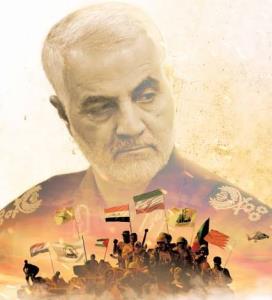





Alwaght- At a meeting titled "the prospects of the Iraq's resistance in the light of the statement of the Shiite Coordination Framework about the need for the Public Mobilization Forces to cut off relations to the partisan and political factions" , Iranian analyst and head of the Andisheh Sazan-e-Nour Institute for Strategic Studies, Ahmad Zarean, discussed the Iraqi current conditions and the activities of the resistance groups and their relations with the government in Baghdad.
Critical regional conditions
First highlighting the critical conditions the region is undergoing after Iran war and the fragile truce, Mr Zarean said that not only the status of the Islamic Republic of Iran has changed and Tehran is now recognized regional power but also the US has sustained a bitter defeat whose aftershocks keep reverberating in the American and Israeli societies and also in Washington’s relations with other world powers. Regional countries have also different conditions and its good to bring to spotlight the important cases both in Iraq and Lebanon.
Deep-rooted resistance in Iraq
The head of the Tehran-based think tank went on to discuss the history of resistance in Iraq, stating that the issue of resistance in Iraq is deeply rooted and essentially a historical culture. Resistance in Iraq is not just about today or yesterday, nor is it limited to the contemporary period, rather, the culture of resistance in Iraq has a thousand-year history. Especially among Shiites, the culture of resistance is indebted to the Shiite history of struggle. For centuries, while the majority of Iraq’s population lived under oppression and pressure, the culture of resistance became institutionalized among Iraqi Shiites.
According to Zarean, in the past hundred years, during the mandate period, another dimension was added to Shiite resistance in Iraq and it was resistance to foreign domination, which has existed alongside resistance to domestic tyranny. Therefore, resistance is an inseparable part of Iraqi culture. The uprisings of Shiites over the past century and the approaches of Shiite clerics confirm this claim. Examples of Iraqi resistance over the last hundred years can be seen in the anti-colonial struggle against Britain, the fight against atheistic and communist ideologies in the mid-20th century, the struggle against the dictatorial rule of the Ba’ath Party, the Shabaniya Uprising against Saddam Hussein, and resistance to foreign occupation forces after Saddam’s fall. All these developments show that resistance is an integral part of the political culture of Iraqi Shiites.
The political expert added that the culture of resistance is also affirmed by Shiite teachings and has an ideological foundation. Of course, this culture is seen as a challenge and a threat to both domestic tyrants and foreign occupiers in Iraq.
Mr Zarean went on that if we want to trace the roots of the current Iraqi resistance, we find out that all of them are either organizations emerged during the fight against the Ba'athists since the 1970s or organizations that rose to existence after collapse of Saddam's dictatorship to fight foreign occupation.
Form of Iraqi government's relationship with resistance forces
Mr Zarean also commented on the relationship between Baghdad government and the resistance groups, naming periods these groups passed post-Saddam. Some of these periods have been challenging to the resistance groups, for example, when Jaysh al-Mahdi's internal fighting erupted and the Shiite authority defuse them when it stepped in.
During certain periods, a close relationship developed between the Iraqi government and resistance groups. For example, between 2014 and 2018, resistance groups were at the forefront of developments in Iraq and played a key role in crushing the ISIS terrorist group. During that time, following the fatwa by grand Shiite cleric Ayatollah Sayyed Ali al-Sistani, resistance groups placed all their capabilities at the disposal of the Popular Mobilization Forces (PMF) to fight ISIS terrorists. The defeat of ISIS was largely due to the capacities of the resistance groups.
Describing the relationship between resistance groups and the Iraqi government as full of ups and downs, the political expert categorized it across a broad spectrum ranging from confrontation to cooperation.
According to Mr Zarean, several important factors have influenced the relationship between resistance groups and the Iraqi government. One of these factors is changes in government in Iraq, each administration, depending on its approach, has had different relations with resistance groups. Another factor is foreign intervention, which has played a major role in shaping how resistance groups and the Iraqi government relate to one another.
Overall, due to its nature, each government in Iraq seeks to hold power and it is natural that all of the governments relatively seek to restrict arms within their armed forces framework. It should be noted that many Shitte politicians in Iraq agree that resistance groups guarantee security of the society, continuation of the government, and the interests of the Shiite community. There are some Shiite factions that have no armed wings and have no systematic relationship with the resistance groups, but admit that resistance groups ensure security and interests. They admit that if the resistance groups were prepared enough in 2014 and did not provide their capacities to the PMF, ISIS would have unleashed blood baths in parts of Iraq. He added that one can remember when Samara was seized by ISIS and in some other regions sought to make measures against the Shiite communities, and if it was not for the capabilities of the resistance groups, the Shiites would have received serious blows.
Generally speaking, politicians at the head of the government seek to monopolize military power in their own hands. This creates a contradiction that has existed in nearly all Iraqi governments. In effect, we simultaneously see a kind of attraction and repulsion in the relationship between the state and resistance groups. That is, the government and resistance groups both repel and attract each other at the same time. Whenever the central government feels it needs the resistance groups, we see the state drawing them closer and the relationship becoming tighter. Under Adel Abdul Mahdi's government, the attraction of resistance groups by Baghdad was more pronounced. At the same time, under some Iraqi governments, the repulsion of resistance groups by Baghdad has been stronger. It is important to note that whether the central government repels or attracts resistance groups depends on the government's own condition, as well as regional and international circumstances. Foreign interventions also play a major role in this push-and-pull dynamic. Whenever the Baghdad government achieves stability, a repulsion dynamic toward resistance groups emerges; whenever the security situation intensifies, an attraction dynamic toward resistance groups takes over.
Regarding the current state of relations between resistance groups and the central government in Baghdad, the regional affairs expert said that right now, the security situation in Iraq is stable, foreign pressure from the Americans has increased, and a new government has taken office. This combination has brought the issue of resistance groups under discussion and review at this time.
The US relations with resistance groups
Mr Zarean also pointed to the relations of the US with the resistance groups, saying that since these groups formed in opposition to the American occupation of Iraq, Washington essentially has problems with them. The Americans blacklist these anti-occupation groups as terrorist groups and offer rewards for information on their leaders. In other words, the American ideal is obliteration of the resistance groups.
According to Zarean, after October 7, 2023 attack by Hamas on Israel, Tel Aviv with the US support launched a project to cleanse West Asia of resistance groups aimed at normalizing Israel in the region, something again related to the resistance groups. So, discrediting and de legitimizing, and ultimately eliminating, resistance institutions and organizations from Iraq is the ideal scenario for the Americans in the region and in Iraq. The US is pressuring the Iraqi government to pursue this project, just as the same path is being followed in Lebanon. What is currently being pursued in Iraq is not about disarming or dissolving resistance groups; rather, the key issue is redefining the relationship between resistance groups and state institutions, especially the PMF. Of course, disarmament is a broader project in the region, one that lies within the Americans' strategic horizon. Washington is seeking not only to disarm resistance groups but also to disarm resistant states, and the Islamic Republic of Iran, as a resistant state, is subject to this project. Raising issues like Iran's missile program or nuclear program also falls within the framework of disarming resistant states in the region, pursued through American pressure.
Impossible dissolution of resistance groups
Asked for comments on the future of the resistance groups, Mr Zarean said that dissolution or disarmament of the resistance groups in Iraq is impossible given the Iraqi social fabric. The need for sectarian groups' balance makes disarming impossible. The Kurds and Sunnis each have their own armed groups and the resistance groups are the armed groups of the Shiites. Saving the Shiite community and resistance culture are two key factors making disarming unthinkable.
This West Asia expert also commented on the pursuit of a political path by some Iraqi resistance groups, saying that right now, we are seeing that some resistance groups, such as Asa'ib Ahl al-Haq, Kata'ib Imam Ali, and Saraya Al-Salam, have cut their ties with the military brigades of the PMF. A statement was also issued at the home of [former Prime Minister] al-Abadi, according to which the severance of ties between resistance groups and PMF’s military brigades is based on the stance of the religious authority, the constitution, and the Hashd law, and that all political factions in Iraq should cut their ties with this voluntary military organization.
Pursuing political path
Shedding light on the motivations and reasons of the groups that have cut off ties to the PMF, Mr Zarean said that several points need to be taken into account account:
First, the Americans cannot place the PMF on the terrorist list under the pretext of its ties with resistance groups. As an effective force, the PMF will be able to maintain its capacity inside Iraq.
Second, resistance groups like Asa'ib Ahl al-Haq that cut their organizational ties with the PMF's military brigades and hand over command of their own military brigades to the it become eligible to participate in the government. This is a good opportunity for resistance factions to operate in the political arena. Asa'ib Ahl al-Haq currently holds 28 seats in the Iraqi parliament, more than any single party (not coalitions), and will play a very prominent role in the Iraqi government. Moreover, the current deputy speaker of the Iraqi parliament is from Asa'ib Ahl al-Haq. In effect, the government is not just about the military domain. If the resistance faction can advance its major strategies in the political sphere, that will be a significant opportunity for the resistance.
Third, in the process of certain resistance groups cutting ties with military brigades, pressure on the Iraqi government also decreases, and the process of forming a complete government will accelerate. Currently, only 14 out of 23 ministries have been appointed. With the entry of resistance groups into the political process, the completion of the government can speed up, the Iraqi government will be organized more quickly, and it will move past its current situation.
Fourth, it should be noted that other resistance groups, such as Kata'ib Hezbollah, which hold seats in parliament, have stated that if participation in government is conditional on cutting ties with military brigades, they will not seek seats in the government. In other words, other resistance groups like Kata'ib Hezbollah, which are highly effective, will maintain their resistance status by keeping their weapons and military organization intact.
Political path complementary to resistance
In the final part of his speech, Mr Zarean highlighted pursuing political path of some resistance groups. He added that some groups like Asa'ib Ahl Al-Haq and Kata'ib Imam Ali that are following a political path are still in the orbit of resistance and the accusation of them cutting off ties with the thud camp is incorrect. These groups following resistance politically and in addition to maintaining their resistance identity, still hold their power to mobilize and advance the resistance in the politics with this mobilization power.
The West Asia affairs expert held that the resistance in Iraq will continue against occupation and against the Zionists. The resistance will remain the protector of Iraq’s security, territorial integrity, and its people. It was these very resistance factions that crushed the ISIS insurgency, rushed to the aid of their fellow Sunni citizens in Nineveh and the Yazidis during the ISIS crisis, and helped improve Iraq’s security situation. Iraq’s security ranking has improved significantly compared to previous years, and this favorable situation is undoubtedly due to the efforts of resistance groups and the continuity of the government in Iraq.


